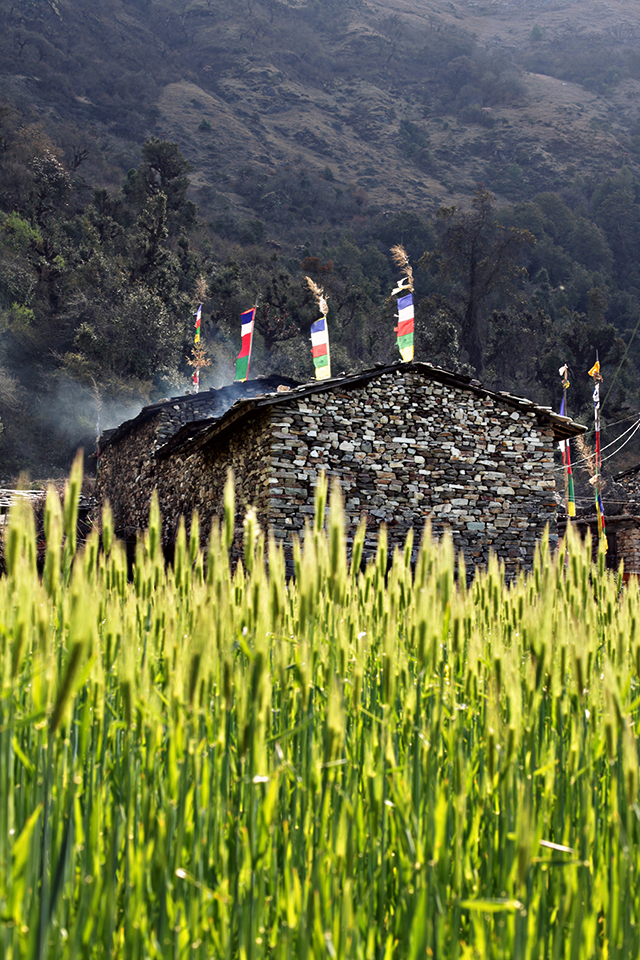
Put simply, travelling around Nepal has been one of our favourite travel experiences to date. Andrew and I loved every second of Nepal's natural beauty, the charming people and fascinating culture while physically challenging ourselves.
Below is a little bit of a wrap-up with some tips and a detailed packing list.

travelling:
After flying into Kathmandu we caught the long, slow (ten hours to travel 180km) and rather colourful local bus to Syabrubesi, the gateway to Langtang National Park. The local bus is an experience not for the faint hearted! Jam-packed with an additional 20+ people on the roof, there were some hair-raising moments as we made our way around the Himalayan foothills, often within a few inches of a steep drop. The driver knew what he was doing though, and it definitely made for a memorable experience!
We shared (a much faster) jeep back to Kathmandu upon the completion of our trek, as we wanted to maximise our time back in the city. When in Kathmandu and it's surrounds, we simply walked and walked and used a car with driver for further afield sights.

sleeping:
While trekking, we stayed in very basic but comfortable tea house accommodation. The walls are paper thin so do bring some earplugs if you are a light sleeper. There is also no heating and limited electricity, so do bring an appropriate and good quality sleeping bag to ensure a warm nights rest.
Ting's Lounge Hotel - set in a beautiful garden, Ting's is in the Lazimpat area of Kathmandu - a much quieter neighbourhood than the hectic Thamel are. While we didn't want to stay in Thamel we liked to eat and walk around the area, and it ended up only being a 1 minute walk from Ting's, which made for the perfect balance.
Peacock Guesthouse - a gorgeous 700 year old Newari house, this place is pretty incredible with it's beautiful wooden carvings and outlook on to Dattatreya Sqaure - the oldest square in Bhaktapur. It is currently under renovation, so the rooms will be even better once completed. Peacock Guesthouse is also home to the Himalayan Bakery, who make some seriously good muffins and cakes, plus the probably best breakfast we had on our entire trip.
 |
| looking out from Peacock Guesthouse |
eating:
Whilst trekking our diet was limited to a lot of carbs, with most meals comprising of eggs, pancakes, porridge, dal bhat, momo (Nepali dumplings) or noodles. The menu at every stop is identical in its offering, but the actual dish may differ slightly due to the different cooking style of the 'chef'. The food actually isn't bad, and will definitely fill the spot when hungry. My favourite dish was dal bhat (lentils, vegetable curry, pickles, rice and chapati) for lunch which gave me a serious boost in energy for an afternoon of hiking.
OR2K - Andrew and I both love Middle Eastern food, so after eleven days of eating dal bhat, it was so great to eat some something different at this Israeli restaurant. It's a pretty pumping place, full of backpackers, which believe it or not we loved after being in such quiet and remote areas.
Himalayan bakery - at the entrance of Peacock Guesthouse in Bhaktapur, not only does this small cafe makes some seriously good baked goods!, you can also get a nice, strong espresso! A real treat for us at the end of our trip.
For somewhere with a view, the rooftop of Sunny Guesthouse in Bhaktapur overlooks Taumadhi Square and is perfect for a sunset drink. The same with Cafe Du Temple at Bodnath Stupa, Kathmandu.

shopping:
In Kathmandu, the market south of durbar square was quite good for souvenir shopping. Again each stall has a similar selection but there are some different pieces thrown in the mix.
If you find you have arrived in Kathmandu and forgotten some gear for your trek or you are in need of additional clothing, there are plenty for outdoor equipment shops in Thamel. Some are better than others, so do ask your trekking guide for a recommendation. Do note a lot of it is fake (it's also very cheap), but it will last your trek and do the job, just not much after that! An example - I bought a larger daypack as I thought my existing pack would be too small. The zips just lasted up until we left, before all snapping off.

trekking:
difficulty:
I have had a lot of people ask about the trekking component of our trip, especially asking how hard it was. This is quite a subjective thing, but I will share from our point of view.
We trekked for eleven days, with most days comprising of 5-6hours of walking. We would be up at 6.30am, pack up, have breakfast at 7am and be out the door by 7.30am, finishing our days worth of hiking around 2pm. Some days were shorter, and some were longer.
We found the Tamang Heritage Trail to be more physically challenging than the Langtang trek, as is it was made up of quite long and steep ascents and descents, with longer days of walking. However, this trek is at lower elevation, so you will not have to worry about altitude sickness and the challenges that can come along with ascending in altitude.
The Langtang trek in comparison, was a much easier, being a gentle ascent up over three days, before heading back down in two days.
Climbing up Tsergo Ri however, was the most challenging part of the whole trek, being a long, steep climb at altitude. But so worth it!
With training and practice, trekking is much easier and therefore enjoyable. Andrew and I are both fit - I walk everyday, while Andrew cycles and surfs, but it's not like we're athletes or anything like that! To train for our trek we simply grabbed our boots and went hiking, ensuring we would encounter steep hills (both up and down) and a varied environment. This is the best training you can have. It's also a great way to wear in your hiking boots and organise your gear set up as you like it.

giudes/porters:
As we had no experience trekking in the Himalayas we employed a guide and a porter for the entirety of the trek. They were both incredible. I'll admit we were unsure about hiring a porter to carry some of our load, but in the end this is a means of income for many Nepalis, and it definitely made our trek a little bit easier! Our porter carried approximately 15-20kg, while Andrew and I carried 8-10kg each.
Having a local guide was great, not only to ensure we were heading in the right direction, but to also teach us about Nepali life and culture. This was especially great on the Tamang Heritage Trail as both or our guide and porter were of Tamang heritage and therefore spoke the local dialects and could teach us about the culture.
I'll admit when I first started researching trekking organisations I was so overwhelmed by the amount of guides and companies available. I really wanted to make sure we used a reputable and recommended guide. This is where Tripadvisor and the like don't actually help as there are tonnes of fake reviews. To bypass this, I simply asked a few people who had completed quite a bit of trekking in Nepal for their recommendations.
This is where I found Kalu at Azimuth treks, and I cannot recommend his services highly enough. From my first enquiry to flying home from Kathmandu, we were so looked after with everything going to plan and running so smoothly. When we return to Nepal we will wouldn't hesitate to use Azimuth again. So if you are stuck like I was, do contact Kalu.
When researching guides, do keep in mind that it is better and more affordable to book through a local Nepali company, as a lot of the international organisations are much more expensive and actually subcontract to the local companies anyway. Just make sure they are registered with the Trekking Agencies Association of Nepal. Also be sure to meet with your guide and porter before your trek starts to ensure you are happy with their level of English, trekking knowledge, and that they have the correct gear and insurance for the trek.
 |
| our crew, with Roshan our guide and Dawa our porter on top of Tsergo Ri |
packlist:
trek clothing:
- 1x hiking boots - waterproof with vibram soles are highly recommended + spare laces.
- 1x down jacket - the mornings and evenings are very cold.
- 1x waterproof windjacket/softshell
- 1x fleece top
- 2x thermal tops
- 1x thermal pants
- 2x quick-drying pants
- 2x long sleeve tops
- 2x short sleeve tops
- 1x singlet
- 5x thick woollen socks
- 1x sunglasses
- 1x hat
- 1x gloves
- 1x beanie
- 5x underwear
- 1x flip flops/sandals - for when you want to take your boots off at the end of the day.
Be sure to pack clothing made from lightweight, breathable and fast drying fabrics. Most tea houses have lines to hang washing, which will dry overnight.
Also, be wary that it can get very hot during the day, especially at the lower altitudes (under 3000m), so it is best wear layers.
I packed a few additional pieces of clothing for Kathmandu and Bhaktapur as I didn't want be wearing my trekking gear all the time.
toiletries:
- sunscreen
- lip balm/protection
- quick dry towel
- toilet paper and wet wipes - bring plenty of this as there is no toilet paper at all.hand sanitiser
- toiletry bag with personal items
- laundry liquid/soap to wash clothes
- first aid kit - including medication for altitude sickness, stomach bugs, muscle pain, cold and flu and headaches.
- 60L pack
- 30L daypack
- sleeping bag - I had a -15 degrees down sleeping bag and it was perfect.
- silk sleeping liner - for extra warmth or warmer evenings at lower altitudes.
- water bottle - nalgene.
- water treatment - such as a UV pen or water purification tablets. We used a UV pen when needed, but you can buy bottled water too.
- camel back - I found it much easier to drink from whilst hiking.
- walking poles - I wasn't too keen on taking these, but they ended up being very helpful when I was tired or making a steep descent.
- torch/headlamp
- earplugs for sleeping
- sewing kit
- superglue
- map of trek
- camera + lenses - be sure to bring a wide angle lens to capture the increidble landscape around you.
- power point adapters - Euro plug
- appropriate chargers for camera, phone and other electronic items you may need - bring plenty of extra batteries too, as electricity in the Langtang region is limited, so be prepared.

To conclude, Andrew and I were stoked with the choice of trek we embarked on, as we were able to experience the culture, be surrounded by the Himalayas and eventually summit a mountain with incredible views. It was a great balance of both easier and challenging days of hiking, with a real feeling of achievement upon the completion of the trek.
If you are thinking of going - go! Even if you have never thought of doing such a trip, I encourage you to. Nepal and the Himalayan region are truly incredible. You will be surprised at what you can achieve if you give it a go. I never before thought of myself as a trekker, and now I cannot wait to do the next one! It's a very unique means of travelling, allowing you to get close to the landscape, everyday life and heritage of an area, especially in areas that otherwise cannot be reached.
If you have any questions, feel free to ask in the comments area below. I'll do my very best to get back to you with a helpful answer.
next: a long weekend in Darwin - the top end of Australia.